Why Sex Exists: The Guppy, the Parasite, and the Paradox of Cloning
Here’s a question that sounds almost too basic to ask: why does sex exist?
Not the behavior. The biology.
Why do most animals, including us, bother finding a mate and mixing genes, when making a copy of yourself would be so much simpler?
1. The guppy and the arms race
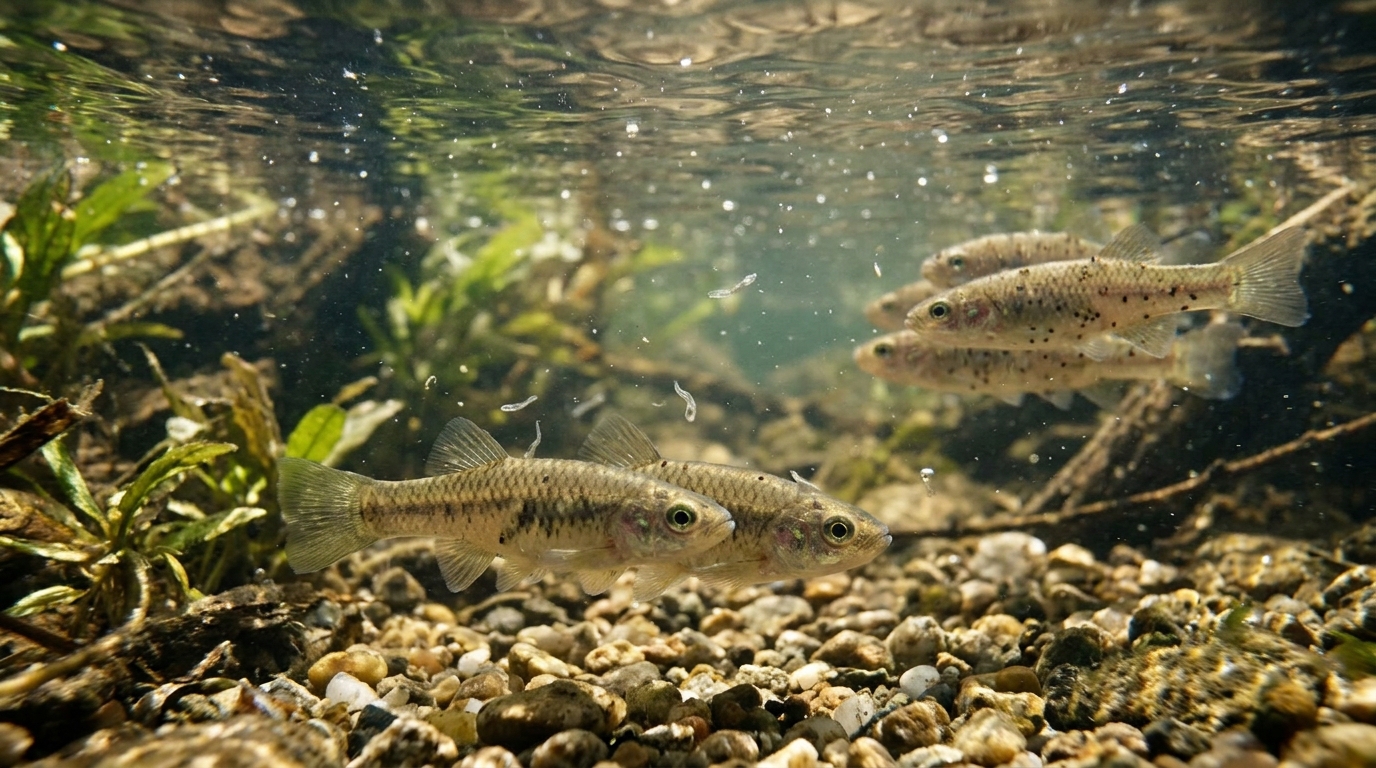
Meet the guppy. In the streams of Trinidad and Tobago, these little fish face constant attacks from microscopic worms called gyrodactylid parasites. The parasites attach, feed, and multiply.
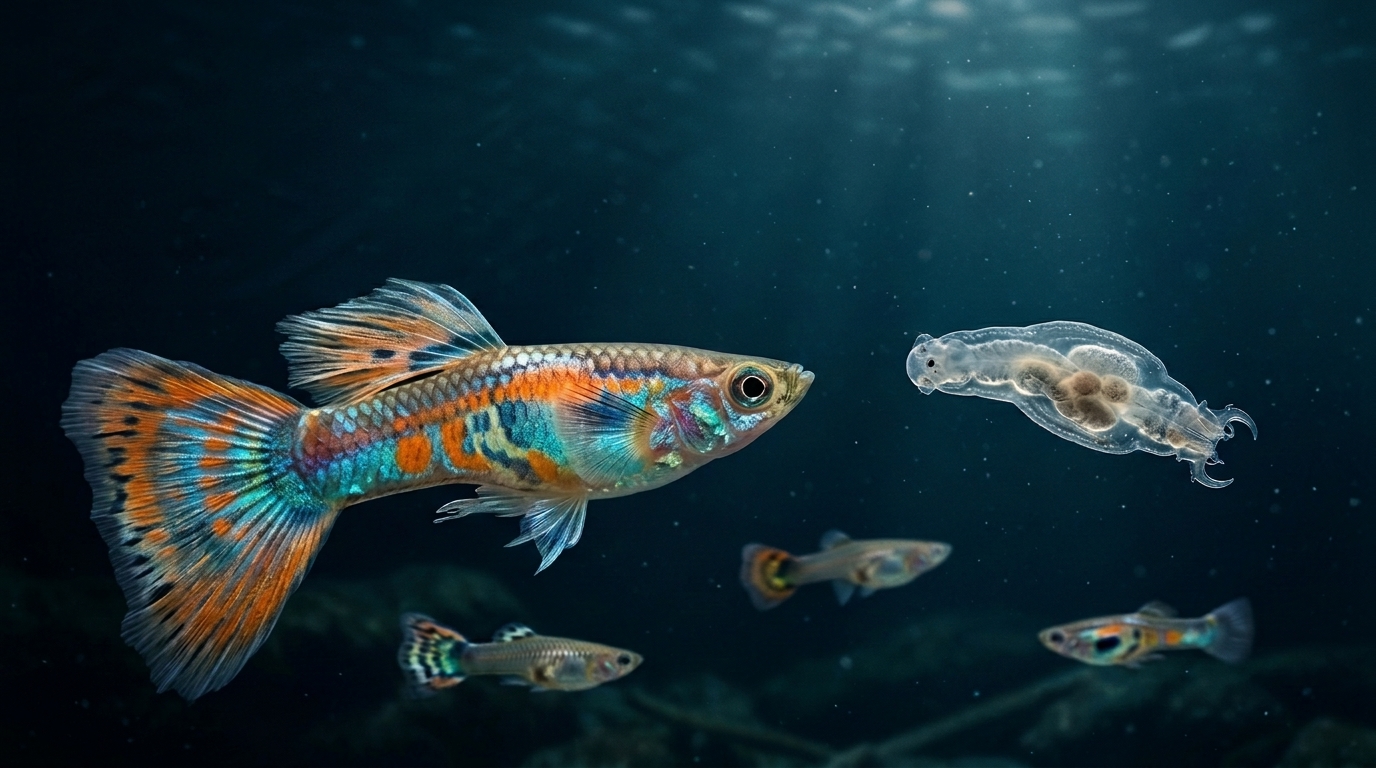
It’s an evolutionary arms race, and neither side wins for long.
Biologists call this the Red Queen hypothesis, named for the character in Through the Looking-Glass who tells Alice: “It takes all the running you can do, to keep in the same place.”
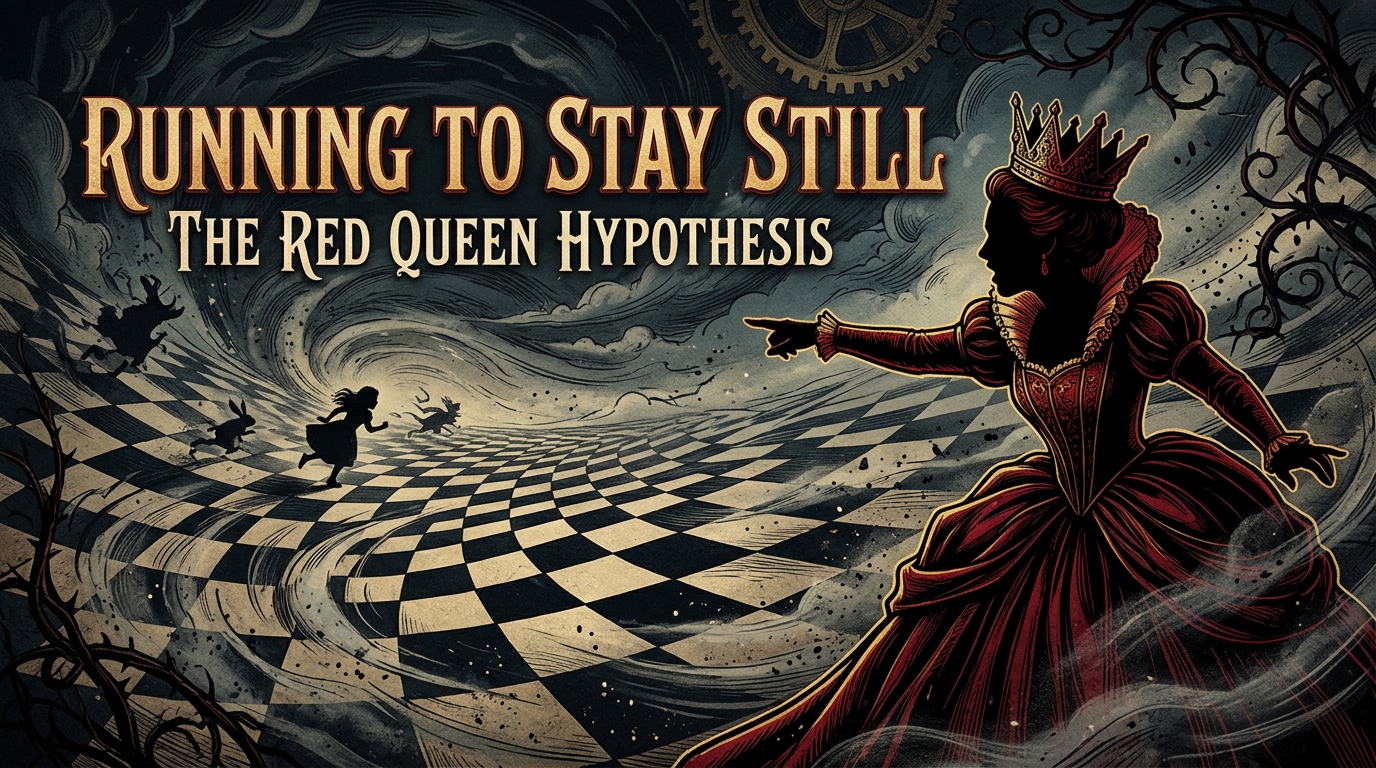
Parasites evolve to infect the most common hosts. Hosts evolve defenses to escape. Each adaptation forces the other side to adapt again.
2. A different lock for every fish
So how do guppies fight back? With genetic diversity, which is exactly what sex produces.
Every offspring gets a different combination of genes. Think of each fish as having a different lock. A parasite that can pick one lock may be useless against the next.
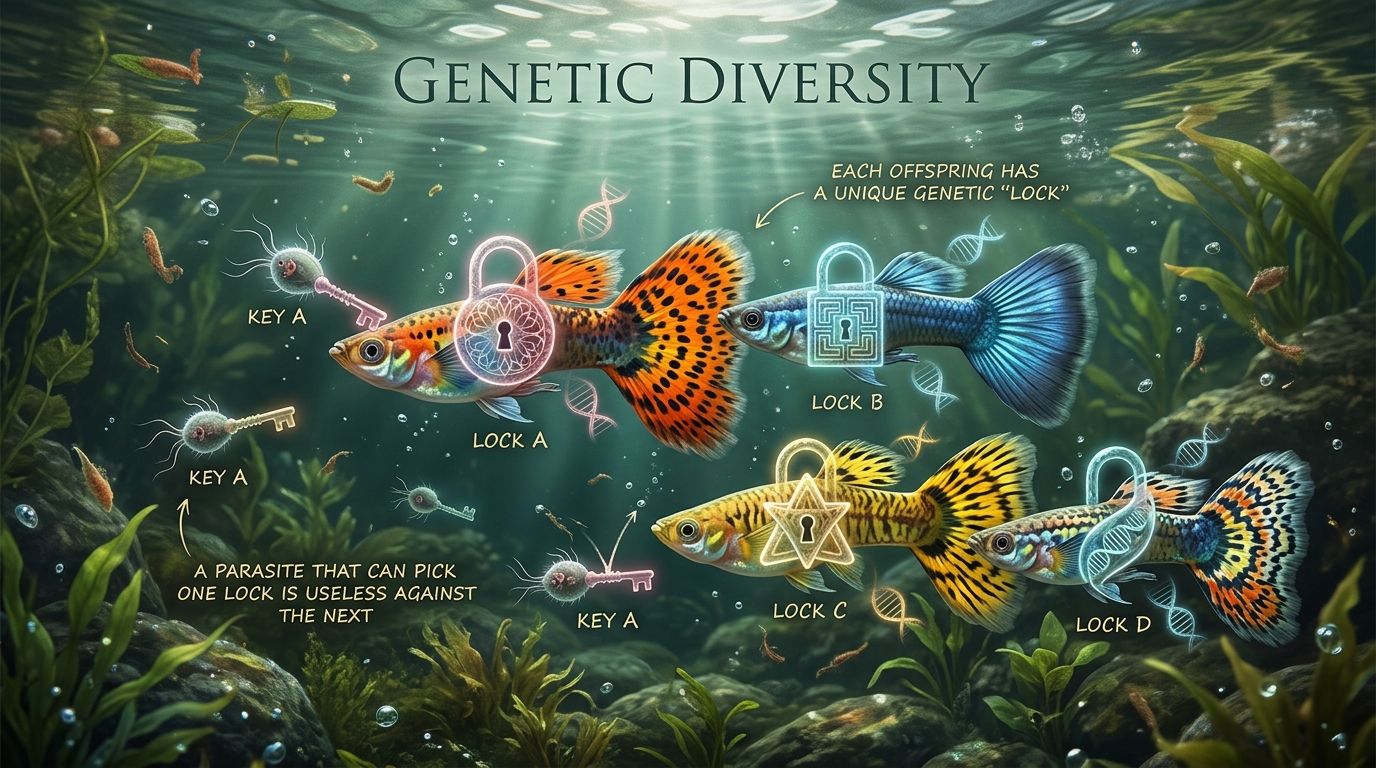
Sex doesn’t guarantee better offspring. It creates variation, and variation gives natural selection something to work with.
3. The clone puzzle
Now compare the Amazon molly. These fish are essentially all female, and they produce genetic copies of their mothers. They need sperm from a related species to trigger their eggs, but the sperm’s genes normally aren’t passed on.
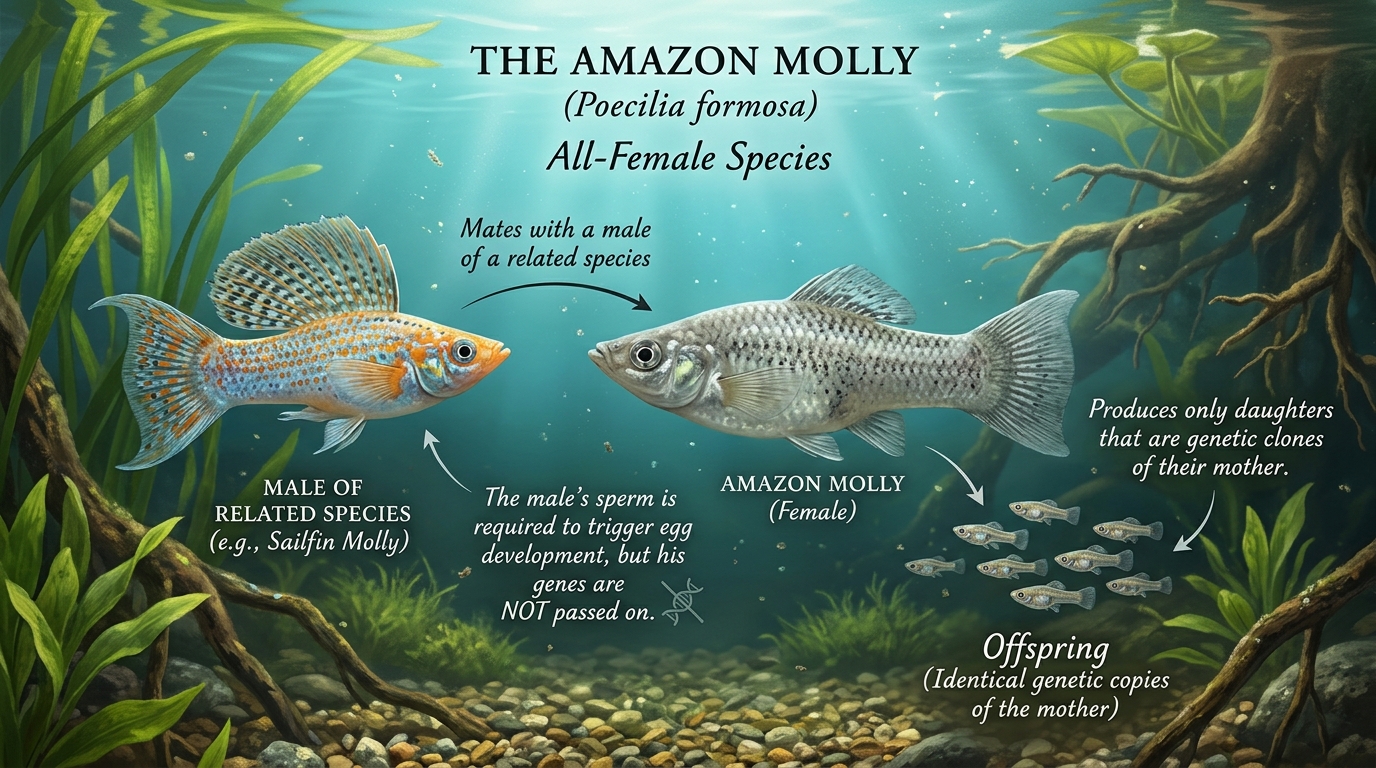
So how does a clone survive in a world of evolving parasites? Hold that thought.
First, a direct test. Scientists exposed microscopic roundworms, C. elegans, to an evolving bacterial pathogen. Some worm populations reproduced only by self-fertilization, which produces nearly identical offspring, much like cloning. Others could outcross, mixing genes from different individuals.
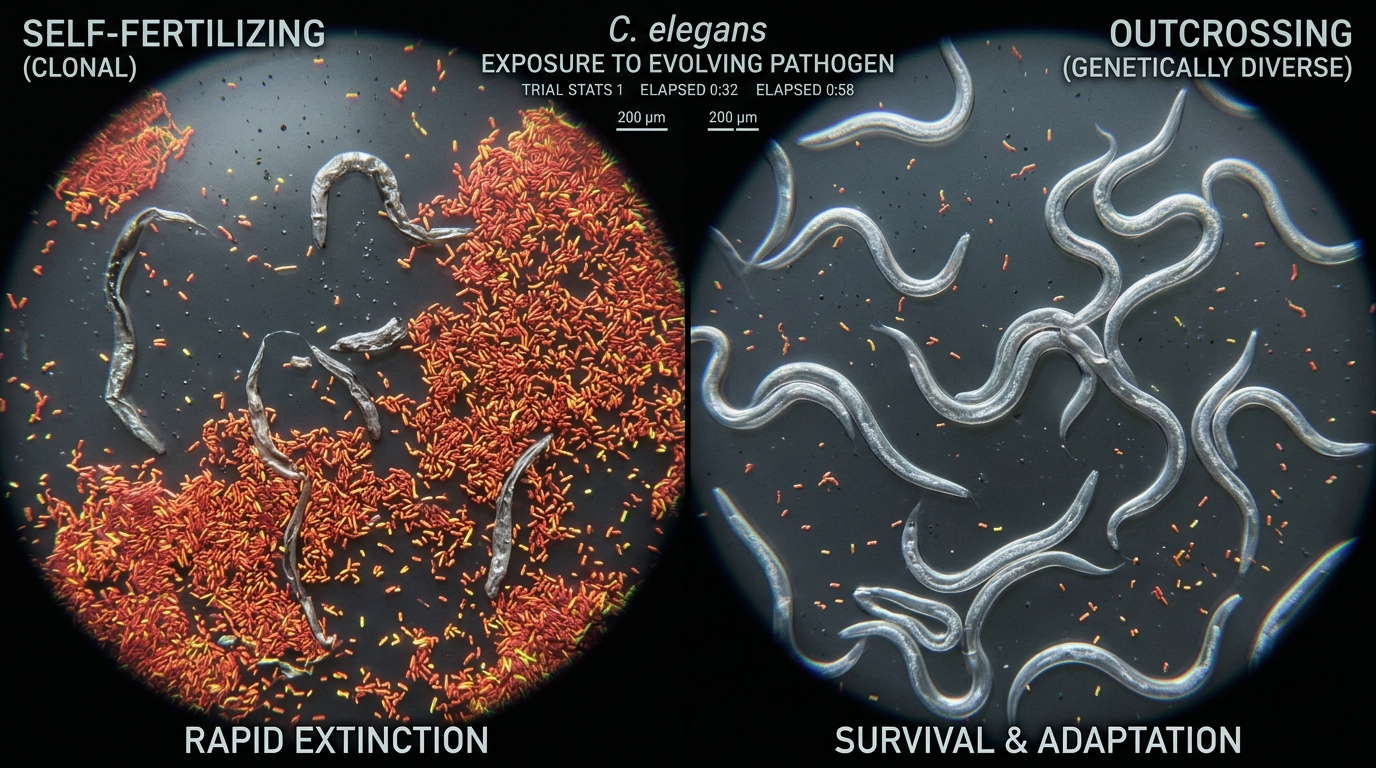
As the bacteria evolved, the self-fertilizing populations rapidly went extinct. The outcrossing populations survived. Mixing genes helped them keep up.
4. The enormous advantage of cloning
But this raises a bigger puzzle. If sex is so useful, why hasn’t evolution eliminated asexual reproduction?
Because cloning has one enormous advantage: speed.
In many species, about half the offspring are males. They’re essential for sex, but they don’t bear young. In an asexual population, every individual produces daughters. Under ideal conditions, a population of clones can double its numbers relative to a sexual one, generation after generation.
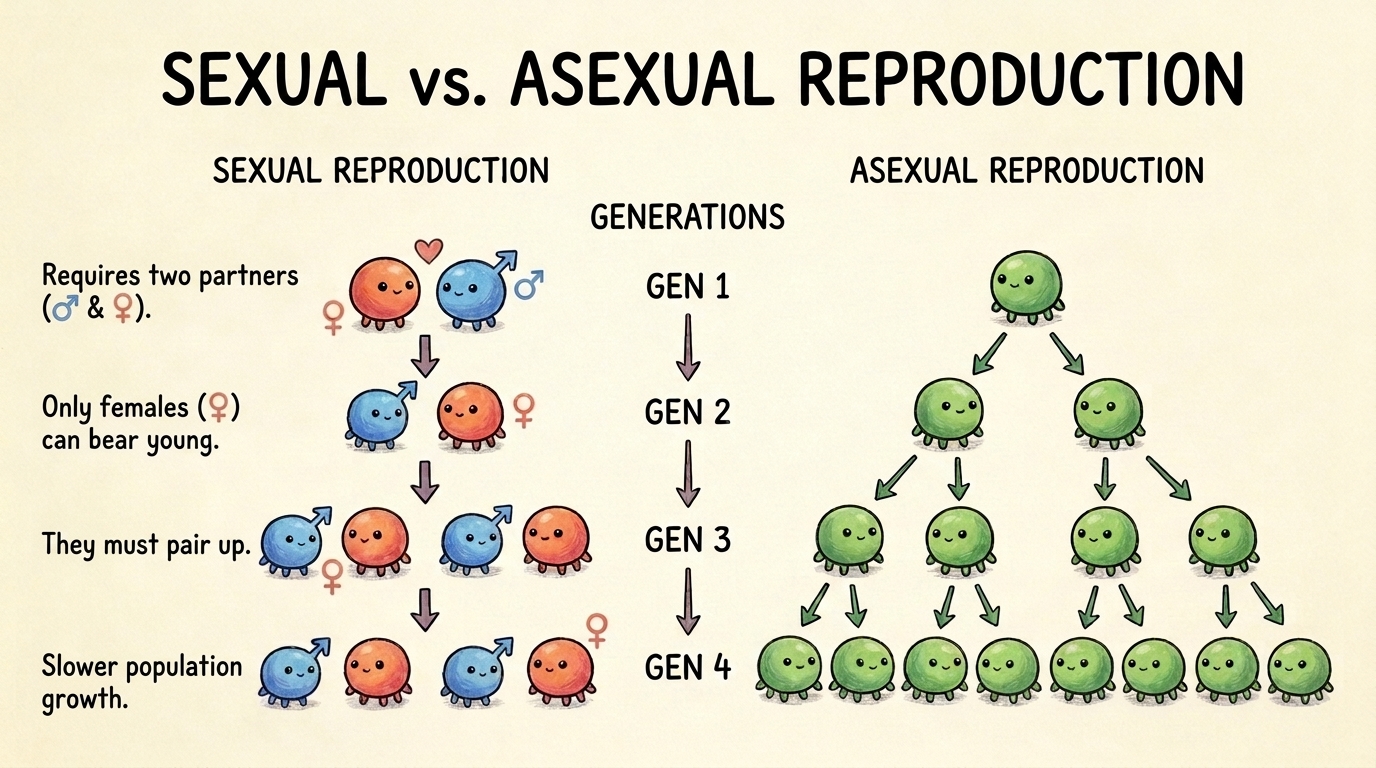
That should let asexuals take over. Yet in nature, sex remains the norm, and most asexual lineages are young and short-lived. The Amazon molly fits this pattern: in evolutionary terms, it’s a recent arrival, and it may not last.
5. How asexuals hang on
Still, asexual organisms haven’t vanished. Some use remarkable strategies.
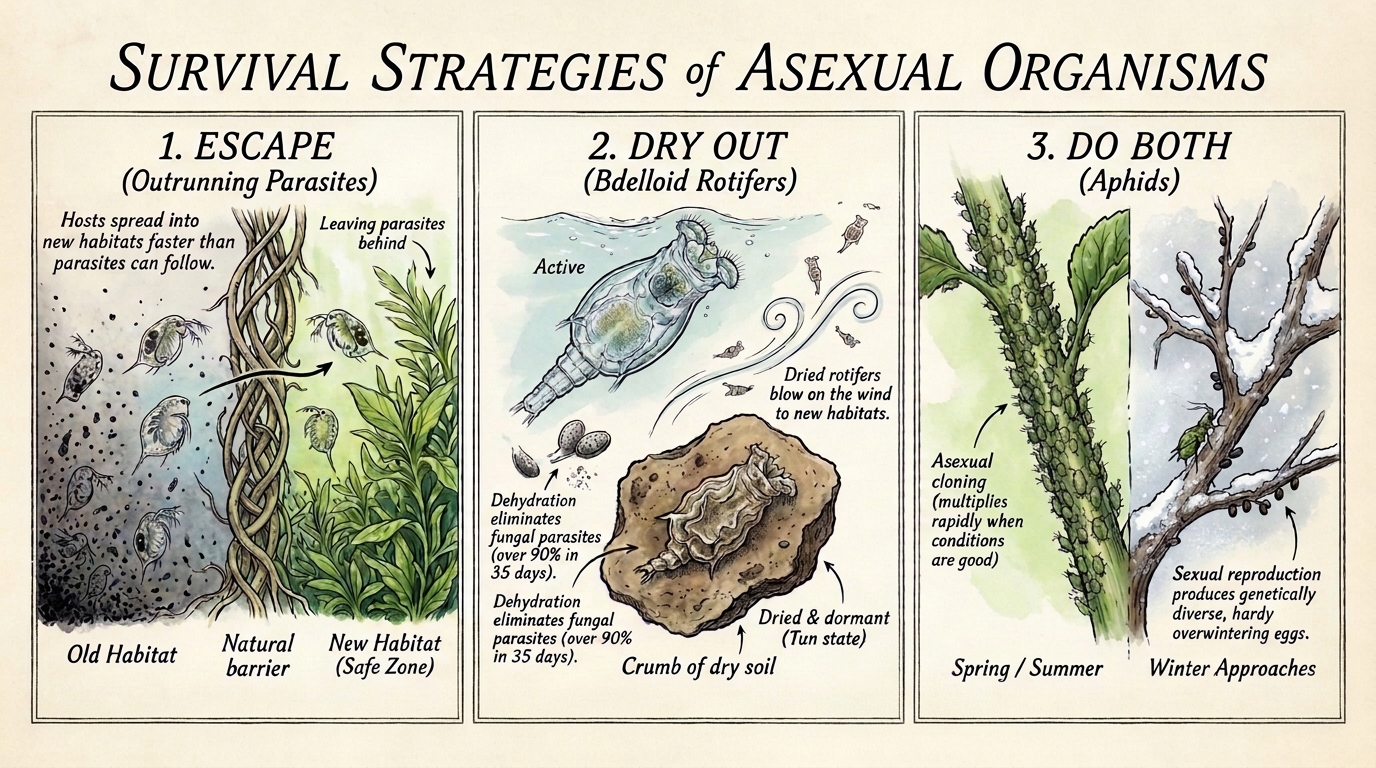
First, escape. If hosts spread into new habitats faster than parasites can follow, they can settle where those parasites haven’t arrived.
Second, dry out. Bdelloid rotifers are microscopic animals that survive near-total dehydration. In one experiment, 35 days of drying eliminated a fungal parasite from more than 90 percent of rotifer populations. Dried rotifers can also blow on the wind to new habitats, leaving parasites behind. And they’re ancient asexuals, which makes them one of biology’s genuine puzzles.
Third, do both. Aphids reproduce asexually for generation after generation when conditions are good, and their numbers explode. But as winter approaches, many switch to sex, producing genetically diverse eggs that can survive harsh conditions.
They combine the speed of cloning with the advantages of sex.
Conclusion: the Red Queen keeps running
So why does sex exist?
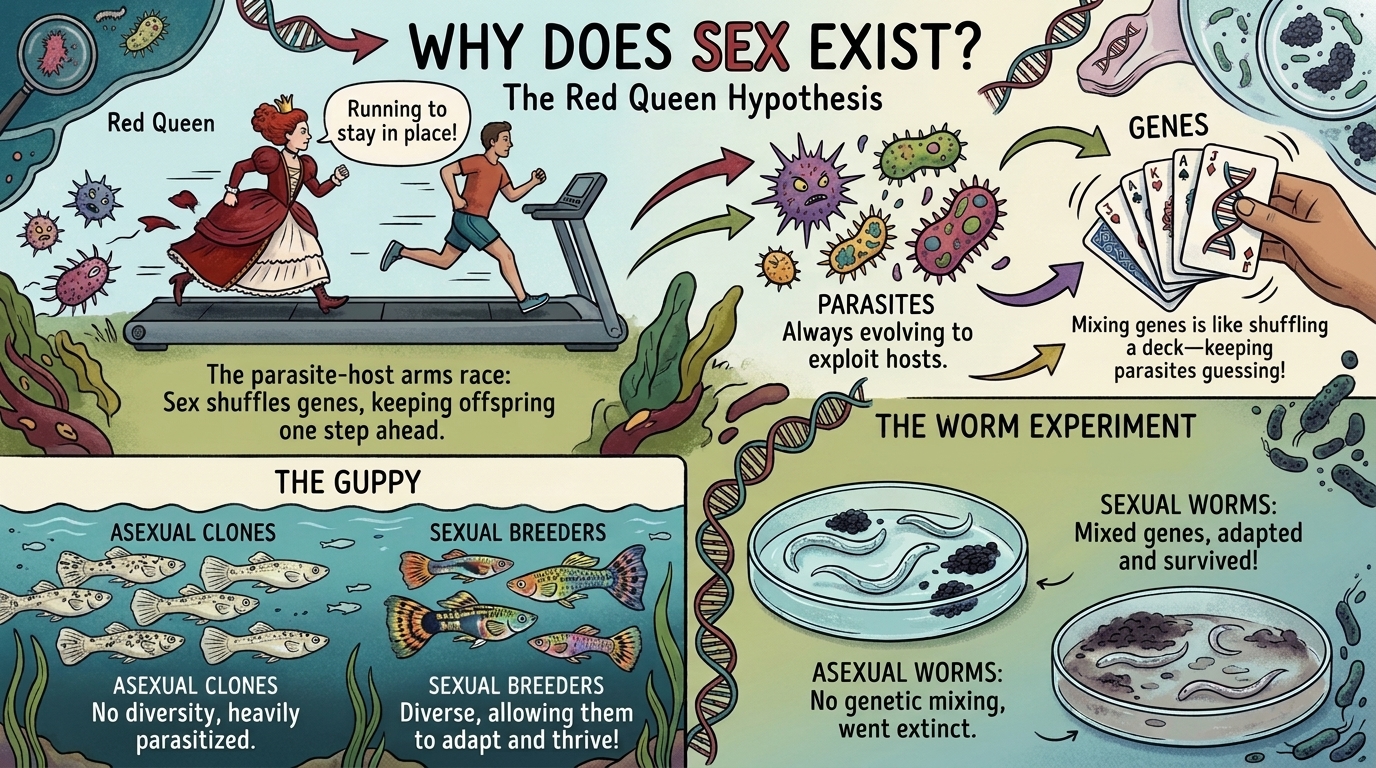
The Red Queen hypothesis offers one compelling answer. When parasites keep evolving to exploit their hosts, mixing genes keeps organisms unpredictable. The guppy shows the arms race in action. The worm experiment shows what happens to those who opt out.
But evolution has no single winning strategy. Sometimes the best response is to reproduce quickly. Sometimes it’s to escape. And sometimes it’s to switch between sex and cloning as conditions change.
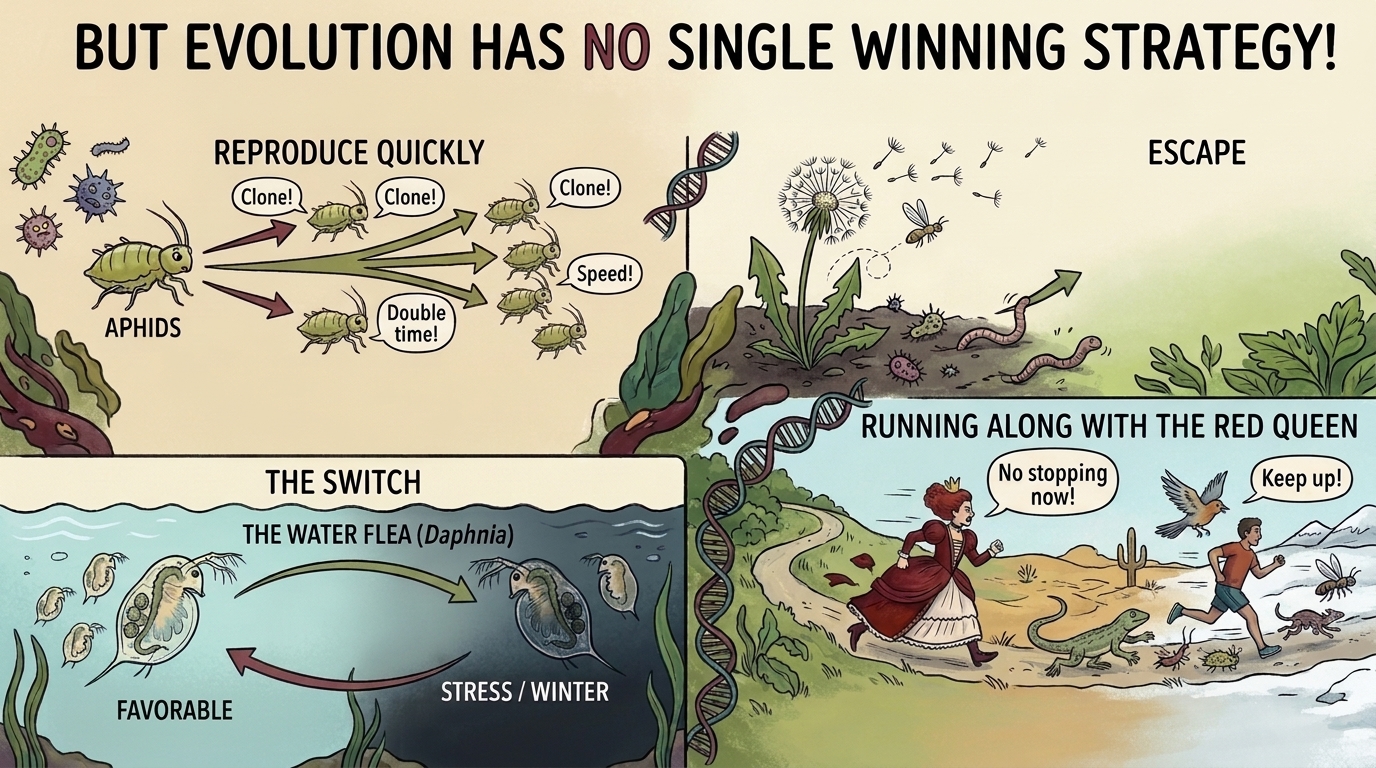
The Red Queen keeps running. And evolution keeps finding new ways to run alongside her.